
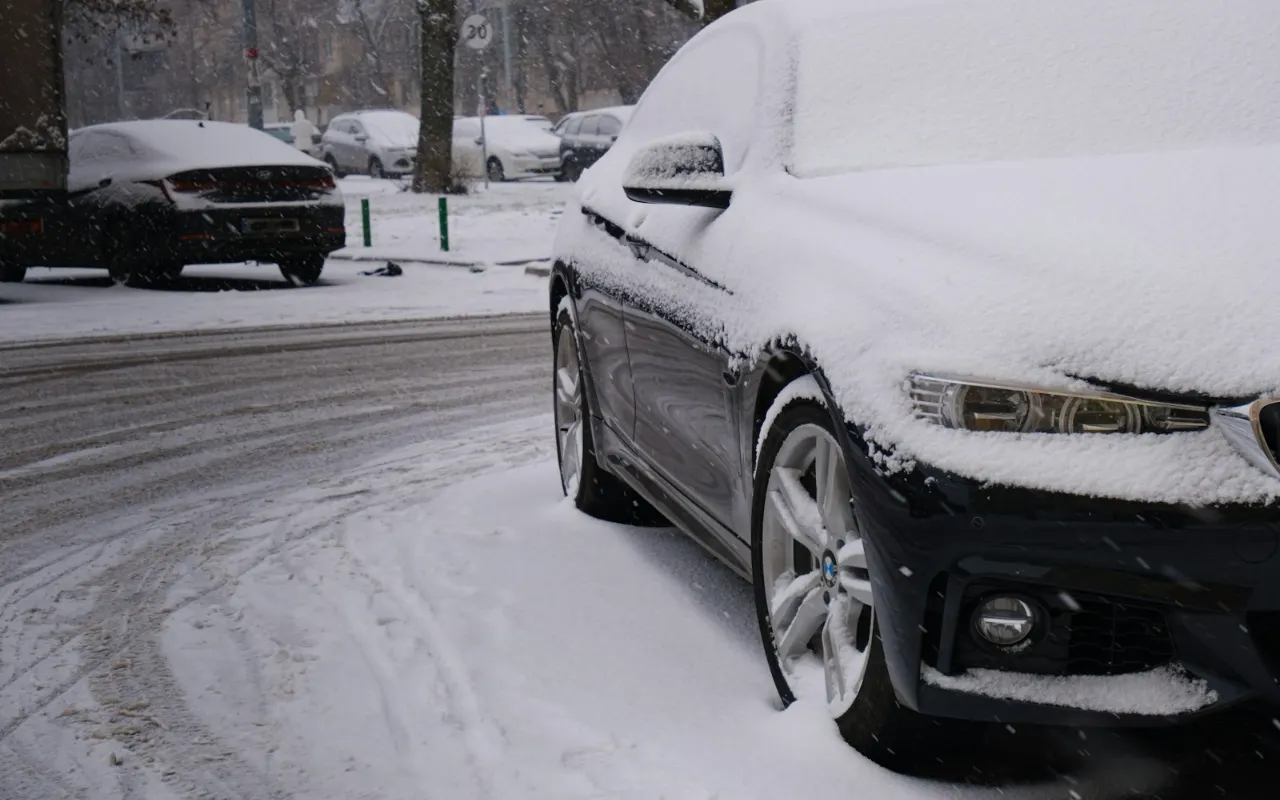
Chicagoland winters can be brutal on engines. Most mornings it's just cold, but every few winters a polar vortex pushes temperatures far below zero. In January 2019, O'Hare hit about 23 below. That's the kind of morning when your oil choice really shows.
What the numbers mean
Take an oil labeled 5W-30:
- The first number with the "W" (for winter) describes how the oil performs cold. The lower the number, the more easily it flows at low temperatures. 0W flows better cold than 5W, and 5W better than 10W.
- The second number describes the oil's thickness at normal engine operating temperature.
So a 0W-20 and a 5W-20 are the same thickness once the engine is warm. The 0W simply flows more easily on a frozen morning.
Why cold starts matter
When your engine sits overnight, most of the oil drains down into the oil pan. On startup, the pump has to push it back up to the bearings, the cam and the valvetrain. Until it gets there, those parts are running with only the thin film left over from yesterday.
Cold oil is thick, so it takes longer to reach everything, and the colder it is, the longer that takes. That's why the first moments after a cold start are hard on an engine. Oil that stays fluid in the cold shortens that unprotected window.
What to do about it
- Use the viscosity in your owner's manual. Many newer vehicles call for 0W-20 or 0W-16 and are built around it. Don't go thicker thinking it will protect more; in the cold it does the opposite.
- Consider a synthetic. Synthetic oils generally flow much better at low temperatures than conventional oils of the same grade. AMSOIL's synthetic motor oils are made for exactly this.
- Go easy for the first few minutes. Long idling doesn't warm an engine well. Start it, give it 30 seconds or so, then drive gently until the temperature gauge comes up.
- Diesels: use the block heater if you have one, and check that your diesel oil suits the cold. Diesels are much harder to start in deep cold than gas engines.
- Change the oil before winter if it's close to due. Fresh oil flows better than oil near the end of its life.
Check your vehicle
The vehicle lookup shows the right viscosity and the matching AMSOIL oil and filter for your vehicle. If you're unsure whether your truck or car would benefit from a switch before winter, send me the details and I'll let you know.
Questions about your vehicle or equipment?
Send Byron the year, make and model and he'll point you to the right products.